A diary of our experience as we start to build our self sufficient lifestyle. From city slicker to hillbilly in how many (easy?!) steps...that's the journey I want to record and share in this blog.
Sono impaziente e gasatissimo. Sciolta la neve, finite le gelate peggiori (quest'anno una minima di -7, non freddissimo) stanno spuntando i primi fiori.
Primula vulgaris
Questa è la primissima primula di tutto il campo. E' avanti perchè sopra il ruscello, al caldo.
Il grosso gattice nel bosco, un imponente salice dei cui fiori cui le api sono ghiottissime e che in fioritura fa ronzare l'intero circondario come ci fosse un elicottero tra gli alberi, ha le gemme pronte a scoppiare in un milione di gattini gialli dolci e profumati. Mancheranno 4 o 5 giorni all'esplosione. Eccolo fotografato intero e in dettaglio, l'ho liberato dai rovi e dalla clematis che lo stritolavano, quest'anno sarà ancora più spettacolare.
Gattice (Salix Caprea)
Gemme gattice
Sono spuntati anche i bucaneve e poi gli altri fiori di febbraio, qualche fragolina, i noccioli sono carichi di polline e i crocus, che già s'erano fatti vedere a gennaio, sono rinati da sotto la neve.
Elleboro - Helleborus foetidus
Nocciolo - Corylus avellana
Zafferano alpino - Crocus
Insomma la terra si sta svegliando e si sente l'odore distintamente, odore di vita nuova. Oggi alle 11:00 le api erano fuori a lavorare di gran carriera: qui le vedete con la griglietta che ho sollevato per agevolargli il passaggio durante le ore di sole. Registrata una massima (al sole) di 17°, minima -2°.
Api al lavoro, 25 febbraio 2012.
E vi informo "annuntio vobis gaudium magnum" che sì, ci sono api bottinatrici che rientrano cariche di polline, sicuramente di nocciolo. Notare le palline di polline giallo sulle zampine posteriori delle api in fotografia. Questo è un ottimo segnale, significa che le famiglie stanno allevando covata, quindi sono sane e ben disposte verso la nuova annata apistica. Si stanno riproducendo!
Questo video l'ho girato tre settimane fa sotto la "gran" nevicata:
Si vedono bene tutto l'apiario e i terreni circostanti.
Nei giorni seguenti ho aggiunto un pezzo ulteriore rivolto a sud e vi ho appoggiato sopra la arnie di cui dispongo al momento per vedere un po' l'effetto che fa:
Apiario visto da sudovest
Si vedono anche i nuovi cespugli di lavanda, rosmarino, timo e salvia che ho piantato nei pressi. L'albero appena a sud, che ombreggia in estate, è un prunus "Santa Rosa" incredibilmente produttivo. Fantastico. Se vi piaccione le prugne, piantate una Santa Rosa!
Vista da nordest
Ecco la vista posteriore-orientale. Ho letto che il nespolo (Mespilus germanica) è il più potente repellente per la Varroa (vampira schifosissima, ci ritornerò a breve). Per questo motivo ho intenzione di piantare una siepe di proprio di nespole tutte attorno. Provarò a farne talee visto che una pianticella ce l'ho già. Frutto che non mi piace granchè, ma che le galline adorano. Bene, mangime in meno da comprare e altri fiori per le apette.
Ad oggi sono a 9 arnie più le provvisorie, e c'è spazio per altre 3. Ho ordinato 3 nuclei coi quali arriverò a 7 famiglie adulte, ne restano 5 da riempire con sciamature naturali e artificiali che spero di acciuffare in annata. L'anno scorso ne ho prese almeno 5, anche se nessuna era poi sufficientemente forte per superare l'inverno da sola, purtroppo, riparto quindi con "solo" quattro famiglie, ma belle forti. Se le cose vanno per il verso giusto una ottantina di kg di miele entro l'autunno dovrei poterli invasettare. Poco? Tanto? Vedremo. Quest'anno, avendolo avuto, lo avrei venduto. Sfortunatamente ne ho invece raccolto pochissimo, per svariati motivi al di fuori del mio controllo. Ma passiamo oltre.
Cora la gatta Vs arnia IV
La gatta era molto incuriosita dal gran ronzio e dal movimento di api: imparerà in fretta a stare alla larga? Il cane c'ha messo poco a capirlo, vedremo il gatto...
Sto approntando i telaini trappola (metodo Campero Tit3) per la lotta biologica alla varroa, lo schifosissimo acaro che sta decimando le api di tutto il mondo. Purtroppo, a causa sua, non esistono praticamente più sciami selvatici di Apis mellifera, le api domestiche sopravvivono ormai solo se protette dall'apicoltore. Gli acaricidi hanno dato ottimi risultati i primi anni, ma poi si sono sviluppati ceppi resistenti ai farmaci (ma va?!) inoltre, si è temuto per la contaminazione del miele con i trattamenti, tanto che non è possibile trattare con i melari apposti. E i controlli chi li fa? C'è poco da stare allegri. Lo scorso anno ho deciso di intervenire con un approccio "soft" ed ho usato solo un repellente naturale a base di timolo, che devo ammettere ha funzionato bene, dalle 20-30 varroe cadute (schifosissime) al giorno del primo ciclo sono arrivato a zero al quinto. Ho trattato per tutto il mese di settembre, a melari svuotati.
Quest'anno sarò, se possibile, ancora più pulito: niente repellenti e niente acaricidi, a maggior ragione. Le varroe (schifosissime) le eliminerò dopo averle intrappolate nel telaio trappola. Risparmio i dettagli che entrano un po' troppo nello specifico, dico solo che il funzionamento del sistema si basa sulla rimozione manuale della covata maschile parassitata, quindi è una semplice manipolazione selettiva ed esclude prodotti farmaceutici, naturali o di sintesi che siano. Se sarà sufficiente ancora non posso saperlo, la letteratura specifica dice di sì, il bello è che il sistema si mette in atto durante la raccolta del miele (o meglio durante la deposizione di covata maschile) quindi, se una volta smielato ci saranno colonie infestate malamente, il tempo di intervenire col repellente c'è tutto. Spero di non averne bisogno, anche per il costo non indifferente, pari a quasi 3kg di miele per arnia.
Aggiornerò con tutte le novità in corso d'annata, quando arriveranno i nuovi nuclei, se ne formerò degli altri, se ne prenderò, eccetera.
Ricordatevi che lo zucchero fa malissimo.
E il miele invece fa benissimo.
E senza api siamo tutti spacciati.
Basta consumare 2 cucchiai di miele al giorno per ottenerne beneficio.
E poi non venite a dirmi che non ve l'avevo detto.
Una panoramica interna del pollaio: sono visibili galline Valdarno di 10, 9 e 8 mesi.
Volevo allevare galline di tipo italiano/mediterraneo perchè (gusti personali) sono proporzionate, eleganti e vivaci. M'ero innamorato delle Livorno, le galline italiane per eccellenza, ma le selezioni da capannone degli ultimi anni hanno portato a una razza molto selvatica e decisamente antipatica. Me l'avevano detto, non ci credevo, ne ho avuto la conferma. Tengo ancora una Livornese (Leghorn) bianca ed una ISA come riferimento, siccome sono "macchine" da uova che raramente perdono un giorno, ma ho deciso di dedicarmi alle Valdarno. Volevo rendermi utile nella mia opera agricola, allevando una razza poco diffusa o a rischio estinzione, magari autoctona, ma purtroppo di galline bresciane non c'è l'ombra. Forse c'erano, una volta, ormai il mercato è tutto degli ibridi commerciali, broiler collo nudo e Isa su tutte. Galline non riproducibili con esattezza, perchè frutto di incroci selezionati (e brevettati) tra 5, 6 o più razze. Non sono riproducibili per questo motivo. Bella cosa, direte. Già.
Insomma le galline bresciane non ci sono, allora cercando pollame italiano, magari a rischio, magari di portamento e proporzioni mediterranee, quindi uova bianche, orecchione bianco, animali molto rustici e adatti a vivere nel bosco... e se fosse anche tutto nero, perfettamente mimetizzato nel sottobosco? E magari un po' più grande delle Livorno, che è quasi una nana, tanto è piccola, ma che ne conservi le proporzioni, se possibile. Ecco la Valdarno!
La Valdarno è un pollo "da carne" o meglio a doppia attitudine, carne e uova, di tipo italiano. E' a rischio estinzione, perchè un pollo Valdarno ci mette 6 o 7 mesi a raggiungere un peso adeguato. I broiler commerciali sono pronti in 40 giorni, alcuni sono così bombati che vanno al macello in 30gg, convertendo in carne la metà del peso di cibo che viene loro somministrato. Mangiano sempre, continuamente. Una crescita mostruosa sotto ogni aspetto, tant'è che non riescono a reggersi in piedi se lasciati crescere qualche mese, cadono sotto il loro stesso peso. Una mostruosità. Galline del genere non sono adeguate per nessun tipo di allevamento "umano", secondo me. Ma sono chiaramente la scelta del 99,9% degli allevatori, che vogliono ritorni subito e che sono forzati dalle coercitive forze della concorrenza (cit.) ad inseguire il profitto a tutti i costi. Ecco i polli alla diossina, ecco l'inquinamento da pollina, ecco animali che vivono in 30x30cm. Oh no, aspettate, la UE bontà sua ha cambiato le regole, da quest'anno le gabbie saranno per legge più grandi! Già, le gabbie. Per migliorare il benessere, piuttosto che lasciarle libere, si allargano le gabbie. Bontà loro.
Le povere Valdarno sono così finite in disparte e quasi sparite, stritolate dalla concorrenza del capitale.
I pulcini di Valdarno hanno un impennamento rapidissimo, in due-tre settimane hanno già le penne e possono così svolazzare allegramente. Poi crescono lo scheletro per 4-5 mesi, infine aumenta la massa muscolare, fino a peso definitivo. Una crescita di questo tipo è perfettamente adeguata alle necessità mie, cioè un allevamento il più possibile vicino allo stato di natura, senza tante recinzioni, con le galline libere di razzolare in ettari di bosco dall'alba alla sera cibandosi di lombrichi, erbe e insetti vari, prima di rientrare autonomamente nel pollaio. La mattina c'è una apertura automatica pilotata da un crepuscolare, poi quando sono rientrate la sera, le chiudo io manualmente, le conto, e le porto l'acqua fresca. Le uova le vanno a deporre nei nidi protetti (5) che fornisco loro, cambiando quotidianamente la paglia. Una gallina di questo tipo, allevata così, ricava addirittura il 90% del proprio fabbisogno alimentare dal pascolo, riducendo il mio apporto al minimo. In pratica fornisco gli avanzi della mia cucina e basta. Una dieta così inoltre è ricchissima di tutti quei micronutrienti che nessuna miscela commerciale potrà mai fornire. Questo aspetto ha potenti ricadute sulla salute degli animali innanzitutto, ma anche sul loro benessere psicofisico, infatti nel pollaio convivono 3 galli senza aggredirsi. Solo in caso di tempo molto inclemente; neve o pioggia forte, quando non vogliono nemmeno uscire dal pollaio, dò loro delle granaglie miste da agricoltura biologica.
Le Valdarno come tutte le galline italiane sono anche buone ovaiole, il mio nucleo di ovaiole (11 ad oggi, che vorrei durante quest'anno aumentare a 20-25) coincide con le mie riproduttrici. Le uova che consumo sono in pratica quelle che non incubo perchè magari irregolari o troppo piccole eccetera. La produzione è attorno alle 150-200 uova l'anno.
Ma torniamo alle carni della Valdarno: è opinione diffusa che si tratti del pollame italiano più gustoso in assoluto, scuro e saporitissimo, adatto a una cottura lenta in umido, almeno 2 ore meglio 3. Oppure allo spiedo, ma sempre con molta calma. Meglio non cuocerlo alla brace, troppo rapido, mentre immagino che sarà squisito affumicato. Proverò.
Allevato come lo allevo io è pari alla migliore selvaggina; fagiano, pernice eccetera. Pensate che proprio galline Valdarno sono state impiegate per rinsanguare il nobilissimo ceppo francese Bresse, l'unica gallina al mondo, finora, a meritare la DOP e che, dai macellai come ai supermercati d'oltralpe, non si trova a meno di 12-15 euro al kg. E' roba da intenditori, se non lo avevate capito.
Personalmente devo ammettere di non essere un intenditore di pollame pregiato, però quelle che ho avuto il piacere di gustare erano deliziose, questo sì lo posso affermare.
Tacchina in cova nel nido, 1 anno. Sta covando uova di Valdarno.
Eccola spostata nella voliera dedicata alle chiocce. L'ho mossa (di notte) perchè le altre galline in deposizione la disturbavano continuamente andando a deporre sotto di lei. Poi, quando usciva dal nido per bere, mangiare o fare i bisogni, poi al ritorno si confondeva e andava spesso a covare altre uova. Ecco la necessità di isolarla per il periodo della cova. I pulcini, poi, sono molto vulnerabili fino a un mese e mezzo circa, soggetti alla predazione da parte di poiane, corvi, cani e gatti. L'anno scorso ne ho persi così ben 29, parecchi di più di quelli finiti in pentola. Allora mi sono rassegnato a dover usare la gabbia, una voliera di 3mq con casetta annessa, almeno nelle prime settimane. Se sono nelle vicinanze li lascio uscire al pascolo sotto stretta sorveglianza, la sera poi rientrano con la mamma, altrimenti è davvero meglio non rischiare, anche in pieno giorno gli attacchi sono continui, specialmente quelli aerei.
La tacchina è di una razza leggera, adatta alla cova. Le razze pesanti hanno grossi problemi col sesso essendo troppo ciccione per accoppiarsi soddisfacentemente e, sempre a causa del peso, tendono a schiacciare le uova. La mia Pina (El Pì in bresciano è il tacchino, La Pina è la tacchina) è bravissima a covare e sta giusto entrando nella sua ultima settimana di incubazione, sabato prossimo dovrebbero nascere i pulcini. Ha sotto di sè 13 uova. Assieme alla Pina c'è una gallinella nana con cui condivide il nido e, da venerdì (ieri) ci sono 54 uova, sempre delle mie preziose Valdarno, in incubatrice. La data presunta di nascita è tra 21 giorni, il primo di Aprile. Spero di non avere pesci da segnalare. Il bello è che un'altra gallinella nana s'è inchiocciata da ieri, così le metterò altre uova sotto, 4 o 5, di più non ce ne stanno, e quando nasceranno i pulcini dell'incubatrice li affiderò tutti a lei. L'ho già fatto l'anno scorso con l'ultima incubata mia e con una di Davide e entrambe le chiocce hanno accettato gli adottivi come fossero loro. Chiaramente sto parlando della leggendaria Ciuffetta, una gallinella che l'anno scorso ha allevato 5 famiglie, accudendo i pulcini nati a novembre (col gran freddo) per ben tre mesi, mentre quelli nati in estate li seguiva per 20 giorni prima di abbandonarli. Insomma si adatta al meteo. E quando non cova depone. Una mamma chioccia come ce ne sono poche. E pensare che volevo destinarla alla padella perchè è una meticcia bruttina, piena di tutti i caratteri genetici dominanti, insomma la classica gallinella "fritto misto". Ma si sta guadagnando sul campo, con lode, il suo posto nella mia piccola fattoria. Addirittura, a ottobre, è sparita per un mesetto, per poi ripresentarsi tutta felice con una covata di suoi pulcini fatti di nascosto dal sottoscritto.
E brava Ciuffetta. Presto le dedicherò un post tutto suo.
E basta per oggi, devo andare al fienile, c'è da piantare piselli e carote.
Well, its been nearly 3 months since the last post, and as usual, there is loads of news to catch up on. A new baby in the house has meant a re-arranging of priorities, and the blog has fallen by the wayside a bit, but we seem to be settling in to a routine now, so from now on i will try and get back to the weekly postings! For now, the main news in three handy headlines...
1. More New Arrivals
First of all the news, we have lots more "new arrivals" to welcome to the bigoloni project...
This is Heidi, our new shepherd puppy. She joined us a month after Ernesto was born, at only 4 weeks old -- so she is more or less the exact same age as 'Nesto! She's going to learn how to herd our goats when they arrive (they are born now...just need time to be weaned and we should have them by easter!). But only after she learns how to poop outside...first things first!! Her momma is an mix australian and german shepherd, and her poppa is australian -- so she's mostly an australian that likes to put some wurst on the barbie every now and then. She is fitting in nicely with the family, and much loved by all, especially her new best friend...
This is Solus. She came all the way from Canada and brought her human with her for a grand adventure in italy. Her human, Stephanie, is helping her take care of our huge brood of mini-humans! Stephanie is my cousin from Ottawa, and she has come to learn Italian, have an adventure, and help us out with all the craziness in a big family, and I don't know what we'd do without her!! Its really awesome having her here, for the adult conversation as well as all the help!!
Also on the new arrivals slot, we have four new geese, two mated pairs, from Angelo. We are getting loads of goose eggs, and if the damned snow and cold ever ends, we will pop some under a broody hen and get new geese come spring. Oh! And speaking of broody hen...just as 'Nesto was being born, we had a surprise hatching of chicks! Ciuffetta had collected and sat on her own eggs without us even noticing, in all the hubub around 'nesto. We noticed she was sitting, but didn't think it had been nearly so long and kept planning on taking the eggs away (its too cold for chicks!)...until one morning there's a "cheap cheap cheap" coming from the broody pen. Surprise! More Babies!! And Ciuffetta is such a great momma, the chicks had no problem with the cold and are thriving!
2. Winter on the farm
And in other news, it has been snowing snowing snowing here (Stephanie reckons she is in danger of being deported for illegally importing a Canadian winter...) which is fun when you have a sled...the kids have been enjoying it, the chickens not so much. Nor the car. Nor the drivers of the car.
Winter work is all the maintenance and care taking, and Gab has been building fences, spreading manure, pruning fruit trees, clearing wood and brambles. The big job of the winter so far has been building the stable -- with the help of his brother Davide, and his own two hands (and a power tool or two) he's built a wee temporary stable to house the goats when they come this spring.
3. Troubles in Fratta
I will preface this news item with some adorable pictures of Nesto -- he started smiling right on time at 5 weeks, and starting laughing out loud super early, at 2 months. He starting rolling half way (from his tummy onto his back) last week, so all progress on the baby front is perfect...
So perhaps that light news sweetens the bitter to come...the house plans were completely utterly and totally rejected by the park authority. The situation should be resolvable, though, and I will come back with updates when I can!
About 10pm on the 10th of november, the first contractions started -- Ernesto Elia Bigoloni was on his way, and right on schedule for an 11.11.11 birthday. 36 hours later, at 10am on 12.11.11, weighing in at 3.770kg and 51cm long, he was FINALLY born, a few hours off the mark! We reckon he couldn't bear the thought of being born into a world with Berlusconi still in power, so he waited for the official resignation before coming out!
What actually happened was...he had the cord wrapped around his neck, not once...not twice...but three times. We think he kept trying to come down and would be pulled back. The first 24 hours or so were manageable, intense contractions, but only every 20 or 30 minutes or so. But the next 8 hours were absolute hell. He was super active, perhaps trying to wiggle free? and that made the labour excruciating even in between contractions. Finally I got the epidural and the last 4 hours were significantly easier to handle, though I was exhausted and the dosage was light so still felt pain, but it was do-able -- those faint thoughts of jumping out the window dissolved and Ernesto was finally born!
The midwife was calm, cool, and fast as lightening -- she freed him from the cord and he was rushed to the newborn ward. He was completely blue, but they had him breathing in no time. Apart from his breathing, which was laboured and super fast, everything else about him was fine and healthy and perfect.
Now that my ordeal was over, Ernesto's was just beginning -- the laboured breathing was because he breathed lots of liquid into his lungs during the delivery. His lung capacity was reduced as a result, and he had to pant just to get enough oxygen -- that's too much work for a newborn, and could have caused lack of oxygen and thus brain problems if left alone, so they put him in the incubator with a higher concentration of oxygen inside, so he got more oxygen with each breath. That kept his oxygen level always over 95%, so he's well and safe from future problems, but it meant he had to stay in the incubator until his lungs were dried out and working normally -- that took 3 whole days.
Poor fella -- all alone in a plastic box for 3 days. After the first day and a half, they let me take him out for a half hour at a time to try and breast feed him, with oxygen tubes in his nose, but he needed way more cuddles than that. In the meantime, and completely unrelated, he also developed a neonatal infection and had to take antibiotics, so we were stuck in hospital for a full week. Now he doesn't like to sit alone -- if he's awake, he wants to be held, and if he's asleep and you put him down, he'll usually wake up! We have lots of catching up to do, and there are LOTS of arms here that want to hold him, so that's not a problem!
We came home finally on friday, a week after the whole thing began. We were welcomed by a family so happy and excited to have a new member. Raff is totally enamoured -- the first thing he said when he saw his new brother was "awwww he's so cute! I love him". He's also constantly telling us that 'nesto is "dadolable" (adorable...). His most used phrase now about his brother is "can I pat him?" Better that he sees his brother like a new pet than a rival!!
Nina and Mia are also thrilled, of course, and are like two surrogate mummies to him. And of course we are ALL so glad to have Gramma with us -- I don't know what we would have done without her help, both when we were in hospital and now that we're out.
So, what's with the name? Ernesto is from Ernst, a German name, and it means "strong". Though in English "earnest" or sincere is not related to the name, it adds to the strength of the name I think -- it connotes strong honest direct will. He was named after Che Guevara, whom Gab admires greatly and has studied extensively. I am not such an expert, but must confess I think he was awfully sexy! Just now, looking up a photo to stick in, I found mention of his complete name, until just now we never knew he had a middle name...anyone have a guess at what was Che's middle name??? RAFAEL!!! No WAY.
Anyway, we know its a mouth full -- not easy to call a little baby Ernesto. Its a heavy and important name, noble and courageous, but not so very pretty. So you can call him by his middle name if you want, Elia. Or you can call him 'Nesto (that's what we call him) or you can call him Stino (for Ernestino) or Tito (for Ernestito) or even Ernie if it feels good! You can call him baby boy or coocoocoo...if you listen closely, you'll often hear me call him "Raffi!"...oops...
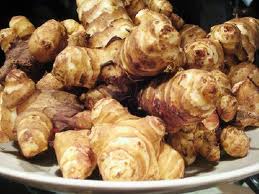
No, don't let the title mislead you, this will not be a poultry porn post featuring certain knobbly roots...just I had planned the whole post this week around my newfound love for Jerusalem Artichokes (topinambur), (and that will come in following paragraphs), but the noble veg was bumped off the priority register by a fresh a miracle that happened only yesterday...
The turkeys had SEX! and again today! And maybe again tomorrow! And for about a week now, we have been getting one turkey egg per day...that means that one of the turkey hens is laying, and one of them is getting laid.... Not sure if they are the same hen, (because only one of the hens has submitted so far) but just in case, Thanksgiving, Christmas and Easter have all three earned a stay of execution. If we can get them to reproduce, they will be worth feeding over the winter, and we will be able to produce our own turkeys year round instead of buying the chicks (turkey chicks cost about 10 euros each!)
According to Barbara Kingsolver (in "Animal, Vegetable, Miracle") turkey sex is supremely rare. I think that may be just american turkeys, but nonetheless, even here the norm is for artificial insemination and mechanical incubation, which means the animals themselves just don't know how to 'do it'. The big heavy meat birds actually physically can't do it, but our second round of turkeys are a local rustic breed and they seem to be managing just fine. In fact so long as Natalina, the original turkey hen (a commercial meat hybrid) was around, nothing was happening. She was too big for the cock and she didn't make eggs, even though she was 3 months older than the other hens. Now Natalina is in the freezer, and they're getting jiggy every day! Takes them about an hour too, to get it all over and done with, from dancing and displays to the actual deed. Funny in comparison with the rooster, who takes never more than 2 seconds...hop on, hop off, hop on, hop off (karate kid cock!) The video below Gab took to show to some geese experts, trying to figure out if our geese are boys or girls (more poultry sex, hmmm), but there are some nice shots of the turkey cock in the background showing off his stuff...
So now for the originally planned post -- Jerusalem artichokes are THE MOST AWESOME VEGETABLE ever! We started harvesting them last week, and I started researching what they are and what to do with them...OK, a vegetable that
1) Grows all by itself, in just about every climate, produces up to 5kg of edible root per plant with no work at all, and the biggest challenge is keeping it to its appointed space because it will take over if you let it(now I know what it looks like, I see it wild everywhere)
2) is the highest vegetable source of iron known, and is also full of other essential vitamins an minerals
3) tastes more or less like potatoes, and is filling like a carb, can be roasted, mashed, fried, but also eaten raw and yet has a fraction of the calories of potatoes and other carbs.
4) has been implicated in prevention of diabetes, and directed towards even a cure -- it is a carb, but its sugar is in fructose and Inulin instead of starch, and humans can't digest inulin -- so you get carb satisfaction without any impact on blood sugar and without carb calories. In fact, it also makes a lovely flour when dried and ground (made bread with it this week, delicious!)
5) IS DELICIOUS
What more can you ask for??? I just love delicious calories that come naturally and wildly, without too much intervention, and the Jerusalem artichoke is just that. Its actually not an artichoke, and has nothing to do with Jerusalem -- its a type of sunflower, (girasole, and 'jerusalem' comes from that) and you eat the roots. Peeled, they can be eaten in any way you eat potatoes. Long term and winter storage is best just in the ground, dig 'em up when you want to eat them, and they live right through the deepest freeze, so those you don't dig up make next year's crop. For the deep freeze of winter, they can keep in boxes of damp sand in the cellar, or I read of one gardener that put them in buckets of mud by the back door -- still freezes, but easy to get through.
One warning though...all that undigestible inulin makes for some pretty world class farting! So add to my list of positives about this veg 6) keeps you entertained for hours with family fart-offs! ("pull my finger Nina!") But don't eat lots before a long road trip...!
For more than a year now, I've been imagining all the possibilities for our new house. I've tried to think of all the little details that will make life easier, all the things I miss from Canadian houses (closets! Mudroom!) all the things I love about italian houses (cellar, thick cement everything), and gone through about a million different designs, refining and getting better each time around, and finally we have our final drafts.
I gave my original designs to the architect a few months ago, and he made his suggestions and adjustments, put in the necessary things in order to get the permissions through -- and this is not an easy thing because we are building what is considered highly sensitive parkland, so we are very very very restricted in what would be acceptable to build; in fact, we are only allowed to build at all because the area needs non-intensive farmers that will tend the land properly, and there aren't enough of those around these days, so we have special government dispensation to come in and take care.
And so now, finally, about 5kg of paper all organised into the appropriate folders for the appropriate bureaucrats have gone off the appropriate offices, and within 45-60 days we should have all our permissions set and be ready to build...of course, in 60 days it will be winter, and we can't do anything until spring anyway, but still....
So here are the floor plans -- a few essential things I really really wanted include the mudroom -- a place to sit on a bench and put on boots and hats and coats, with its own entrance and outside the mudroom door will be a bench, bootjack, and fountain for cleaning up before coming inside. Also the easy access from the kitchen to the cellar. In the original plans, I had a spiral staircase in the kitchen itself, and then i realised that was dumb...I just had to put the kitchen right by the backdoor staircase. Imagining trying to navigate a spiral staircase with a crate of 30 jars of jam set me straight pretty quick on that. Gab was smart enough to realise we would need ramp access to the cellar as well because even a regular staircase will be a pain to access with a 70kg wheelbarrow load of potatoes!
I also insisted on a huge dining space, within the kitchen. Dining room separate from kitchen dining has just always been wasted space for us, but I need dining space big enough for entertaining, and we can have some biiiiiig parties, so the 10 seater table in the kitchen will have another 12 seater attachment that we will put in a "T" across the top when we have parties. The sitting area in front of a big open kitchen fireplace was also an essential. Of course, big kitchen space with sit in island, with all the cooking we'll be doing, that's essential. Windows in the kitchen, lots and lots. That's something very uncommon here, and in fact I had to fight for it...Gab and the architect will both see the benefit when its finally built!
A bonus that i love but had not even dared to put in the original design is the loft studio space above the dining area. Because of the strict building restrictions, we can only have a ground floor, can't over 4m height as an average across the whole...however, there is a high ceiling space right across where its widest, and just enough for a loft comes out right in that space. The loft will look down on the kitchen and the sitting area, and will have a lovely wooden bridge which will cross the entrance hallway, so you will see that when you look up from both the front and back doors.
5 big bedrooms, so everyone has their private space, and there is a very big linen/general walkin closet by the bathroom. We only have one "main" bathroom because we're a "pee with the door open" kind of family, and always end up using the same bathroom anyway, so all our bestest bathroom resources will go into one single gigantic super wonderful bathroom, and the other two bathrooms will be just small useful things. Oh, there's a fourth bathroom in the basement, but I don't think we'll be using that much -- its a just in caser...The laundry room, off the small guest bathroom, has a door directly onto the portico, so laundry will go straight from the washer outside onto the line without any carrying anywhere.
And here are the computer renderings of the house placed into an actual photograph of the land where it will be built. The hills in the background are on the other side of the river, the house backs onto a steep cliff down to the river, where will put a nice gazebo as a walking / lookout point.
First, below pictures of the front of the house. Not shown, the barn would be just to your right as you look at the house in this direction. The house will built with antiseismic armoured cement -- the wooden panneling is just an aesthetic finish that the bureaucrat responsible for passing the externals is particularly partial too -- she has already pre-approved our first drafts, so we know she likes this finish. Also, the scan came out a bit too yellow, the colour of the stucco parts is more biscuit than lemon...
And here is a rendering of the house from the side. This is my favourite perspective, and its what we'll see as we come in from the garden and poultry areas. The top pic you can see the back of the house and the portico, and the bottom pic is full-on side view, and you can see the barn in the background behind the house.
And here is the rendering of the barn -- the top pic is what you see from the house, and the bottom pic is what you see from the road, and the side the animals access from. The top doors are hay storage and the bottom is the circuit for the goats -- they go in the small door on the right one at a time to be hooked up to the milking machine in the milking room, then exit the milking room in to the main barn area from inside, then exit the barn from the main double doors in the middle. Not shown, just around the corner where the wooden panneling is, is the big garage and storage area, and on the "short" side of the barn (so the window on the right side of the top picture) will be my mosaic studio and materials storage area.
Now we just have to wait for all the permissions to come back, and we are set to go! But first there's a baby that needs to be born (first things first, right! Priorities priorities!)...only a few more weeks now before Ernesto Elia joins us, and I am quite ready...he's getting awfully heavy!!
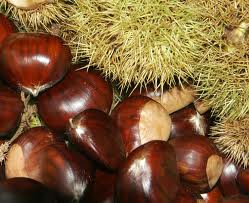
Chestnuts Chestnuts Chestnuts Chestnuts Chestnuts...for the next few weeks, that's all I'll be seeing in my waking hours and in my dreams...
Chestnuts are an awesome food, though -- they are roughly the nutritional equal to rice (so treat as a carb, not a nut!), and can provide a carbohydrate staple in the diet. Different from other carbs, though, is that they grow on trees, renewed every year without any special care or special demands on the soil.
All our other carbs, rice, annual grains, corn, soya, are extremely demanding on the environment in so many ways -- they take loads of irrigating, which means salination of the soil as well as draining and ruination of wetlands. They take loads of nutrients from the soil, which means loads of petrolium based fertilizers in order to use the same fields year after year -- and without that petrolium based fertilizer, all those beautiful amber waves of grain are absolutely sterile (yeah, bio fuel my ass...hate to break it to the bio fuel believers out there, but the biomass doesn't grow in sufficient quantity without the petrolium based fertilisers...bit of a catch 22 there) They take loads of heavy machinery (also oil dependant) to sow, to harvest, and to process. Grains on a large scale are simply not sustainable without oil, and as it starts to run out, we will have to learn to do with fewer annual grains and standard carbs in our diet.
But not so for chestnuts. They just fall from the trees. You can prune them a bit if you want, and it doesn't hurt to give them a bit of manure around the base, but whether you do or not, they will still make lots of yummy carbolicious fruit, which makes a flour usable like wheat flour (though the bread is not so nice and fluffy). The problem with chestnuts is in the processing. They are super yummy and delicious, but their shell and skin is a total PITA to remove. (Mind you, its not a piece of cake to thresh, separate and grind wheat by hand either, and so!)
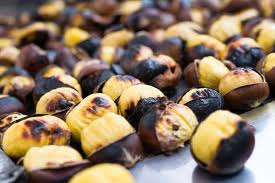
I've been experimenting and researching all over the internet for other people's experiences and advice, and have tried about 16 million different methods so far (well, maybe 5 or 6...) and still, it takes at least an hour per kilo to prepare and shell chestnuts. The best method I've found so far is to make a good long cut across the fat belly of the chestnut, then roast in a super hot oven for about 15-20 minutes. The outside shell gets crackly and peels off easily. The inside skin, if not removed with the shell, comes off easily if you rub and roll the nut around between your hands. To get just the pulp, rather than the full chestnuts, out its easiest to boil them for a good 40 minutes, without any precuts in the skin, and with a good dollop of oil in the water, then use the sharp tip of a carrot or potato peeler to breach the skin and swirl around/scrape out the pulp. If you want the chestnuts free, whole, and uncooked (like for making Marrons Glacées), make a cut horizontally all the way around the chestnut, then steam for about 15 minutes. Still a major pain in the butt, though!
Recipe for Chestnut Pudding: Made this with the first batch, and it is oh oh oh so yummy...
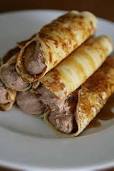
boil 500g of chestnut puree (boil chestnuts, squeeze out the pulp with the carrot peeler, squish any bigger pieces) in 500g of milk. When it is good and pudding/porridge consistency (about 10-15 minutes i guess), take off the fire and add 150g of icing sugar, a sprinkle of cinnamon and a sprinkle of nutmeg. Serve warm as a pudding, or save in a jar in the fridge to eat as is or use for a doughnut or crepe filling.
Today was another very productive day -- the inventory of the day is: 3kg of chestnuts roasted peeled and in the freezer for addition to winter soups and such, 5 apple pies (4 in the freezer and 1 on the table), 2 loaves of bread, one big batch of pumpkin soup, half for the table half for the freezer, and a bunch of meatballs...was almost too pooped to come and write the blog, but i figured that binning the first sunday after promising to write every sunday was just too pathetic, so found my second wind and here I am!